General food and lifestyle guidance only. Follow current labels and official food-safety guidance. Discuss allergies and dietary needs directly. Alcohol is not appropriate for everyone; follow local law and never drink before driving.
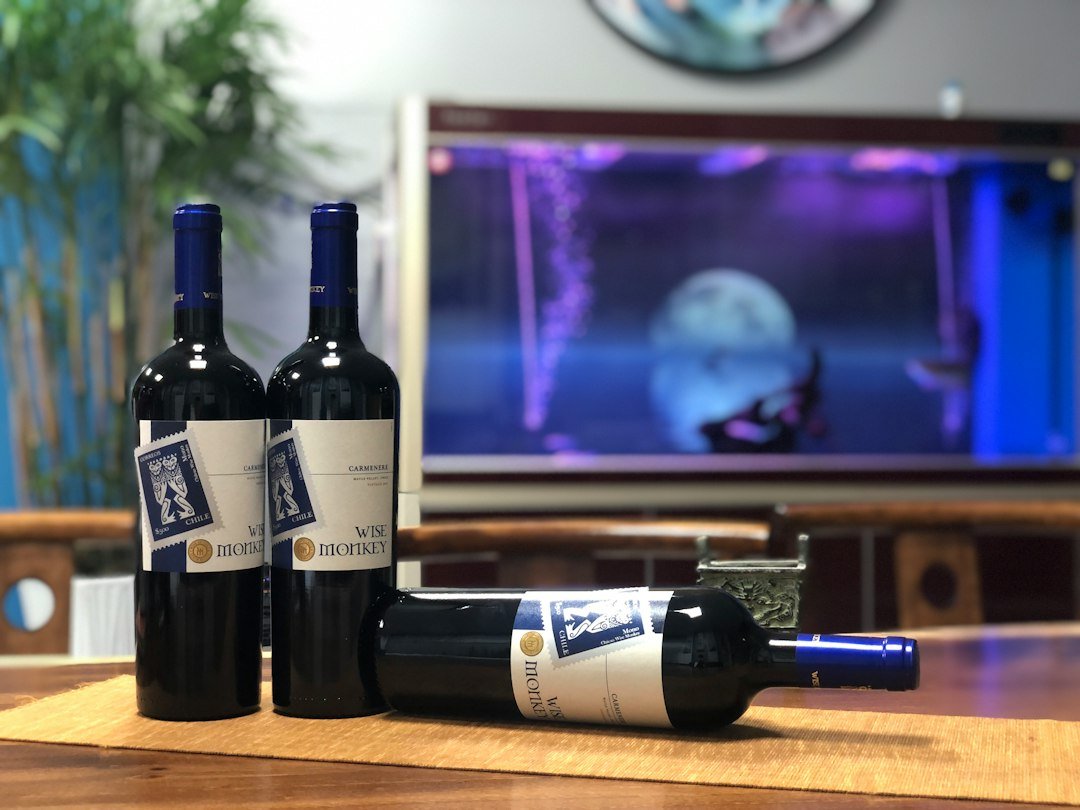
Illustrative external photograph of wine bottles; these are not the two Dr. L wines compared in the article, and no tasting test is claimed.
Read a wine label by identifying the exact bottle first, then separating stated facts from taste questions. Brand, product name and vintage help you find matching information. Grape, origin or alcohol content alone cannot guarantee sweetness, body or whether you will enjoy it with dinner.
This guide is for adults of legal drinking age. Plan an alcohol-free choice for guests who want one.
Read the bottle in a repeatable order
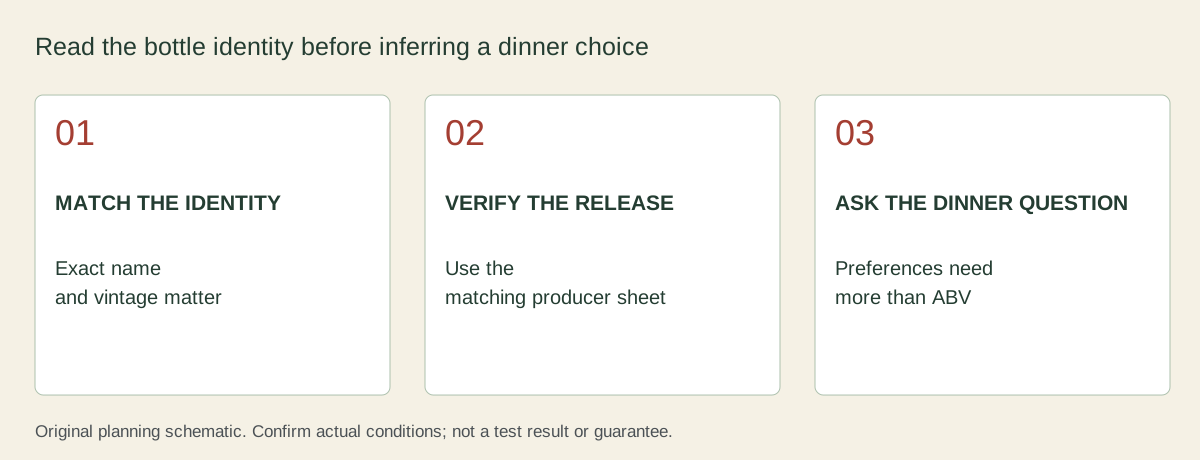
Start with the brand and full wine name. Look for a vintage if one is present, then read the type or grape and origin information. Turn the bottle over for alcohol information, producer or importer details and other declarations. Photograph both sides if you need to identify it later.
For the U.S. market, the TTB's anatomy-of-a-label guide explains required information and placement. Requirements depend on the wine and applicable rules; every front label need not contain the same fields. For example, under the stated conditions a table-wine designation can replace a numerical alcohol statement for wine in the 7–14% range. A vintage is not something every bottle must display.
| Label detail | Useful for | Question it leaves open |
|---|---|---|
| Brand plus exact cuvée or product name | Matching the bottle to its own information sheet | Is a similar name a different bottling? |
| Vintage, when shown | Finding release-specific information | Does the shop page describe this vintage? |
| Grape and origin | Identifying the stated wine | How sweet, acidic or full-bodied does this release taste? |
| Alcohol information | Understanding the stated alcohol content | What is its residual sugar, texture or suitability for a dish? |
| Sulfite declaration and other product information | Checking relevant declarations | Does it meet a particular person's needs? Absence of a claim is not confirmation. |
A real comparison: two similar Dr. L labels
Loosen Bros USA provides official 2024 label images and information sheets for Dr. L Riesling and Dr. L Riesling Dry. We checked these resources on October 16, 2026; we have not tasted either wine. These examples are for identifying bottles, not a sponsored recommendation or proof of current shop inventory.
| Check | 2024 Dr. L Riesling | 2024 Dr. L Riesling Dry |
|---|---|---|
| Identity to match | Official label resource; match the complete name and 2024 vintage | Official label resource; the additional word “Dry” matters |
| Matching information sheet | 2024 Dr. L sheet | 2024 Dr. L Dry sheet |
| Appellation stated in sheet | Mosel, Germany | Mosel, Germany |
| Alcohol stated in sheet | 8.5% | 12.0% |
| Residual sweetness stated in sheet | 41.5 g/L | 8.8 g/L |
| What requires attribution | Manufacturer's sensory language is its description, not our tasting result | Producer describes this as the dry counterpart; “dry” does not mean zero residual sugar |
The sugar values come from the sheets, not a calculation from alcohol percentage. Both wines share the Riesling name and Mosel origin but differ in these stated measurements. This pair demonstrates why recording only “Dr. L Riesling” can leave a purchase ambiguous.
An aroma described as peach or apple does not establish sugar content. Alcohol percentage and grape name also do not independently establish body. Perceived sweetness and texture require more context than a single number; confirm the exact wine's style with the producer or retailer.
Put the label beside the actual dinner decision
The following are hypothetical dinner choices, not tasting tests or guaranteed pairings. They show how to use the verified label comparison while keeping guest preferences explicit.
| Dinner and stated preference | What the comparison can do | Next question or decision |
|---|---|---|
| Lemon-herb fish; guests request a wine described as dry | Distinguishes the named Dry bottling from the higher-residual-sugar bottling | Ask whether the shop's bottle is the 2024 Dry release and whether its style suits the guests; do not guarantee a pairing from the word Riesling |
| Chili noodles; guests welcome noticeable sweetness | Supplies a measured sugar difference to discuss | Consider the regular bottling as a candidate, then confirm the exact release and ask about perceived sweetness and acidity; spice tolerance varies |
| Rich mushroom pasta; guests ask for a fuller texture | Prevents using the 12% figure as a body score | Ask about body and texture for the specific bottle; neither sheet's alcohol number settles this preference |
| Mixed table; one guest avoids alcohol | Separates the wine choice from the guest's needs | Plan a clearly identified alcohol-free drink and check its label against the guest's requirements |
For a meal with several sauces and preferences, the planning wine for a mixed table provide the broader planning context. This article's task is narrower: identify what is actually in the bottle description and what still needs confirmation.
Save a usable buying note
Copy this before visiting a retailer:
Brand and exact wine name:
Vintage on bottle, or not shown:
Market and bottle size:
Label photos:
Matching producer information URL and date:
Confirmed facts:
Dinner, sauce and guest preferences:
Unanswered sweetness/body/allergy question:
What we chose and why:
After dinner: our own preference, not a universal pairing verdict:
If an online listing conflicts with the bottle, ask about the actual stock and matching vintage before relying on it. A label identifies a product; it does not certify personal dietary suitability or promise a particular experience.
Turn unresolved label and style questions into a useful wine-shop request with the meal and budget. Give the retailer the exact name, vintage and dinner preference rather than asking for a bottle that simply “goes with everything.”
Download the editable planning record (TXT). Blank fields are for your own observations.