General food and lifestyle guidance only. Follow current labels and official food-safety guidance. Discuss allergies and dietary needs directly. Alcohol is not appropriate for everyone; follow local law and never drink before driving.
For wine pairing with roast chicken, start with the sauce and the style of the finished plate. Chardonnay, dry rosé or a lighter red such as Pinot Noir are possible starting points for a straightforward roast. Green herbs or a creamy sauce can change which option you prefer. None is a compulsory or universally best match.
Use this guide if the chicken dinner is already planned and you want to narrow a bottle choice without buying several alternatives. It is general wine education for adults of legal drinking age. Drinking wine is optional; plan an equally accessible alcohol-free drink and do not treat a pairing suggestion as a health benefit or a reason to drink.
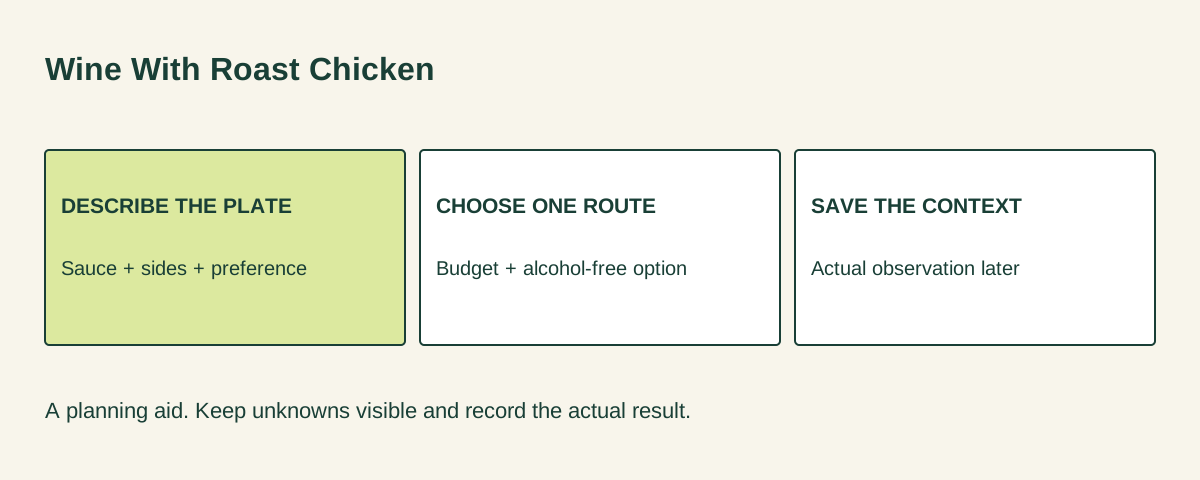
Describe the plate before naming a grape
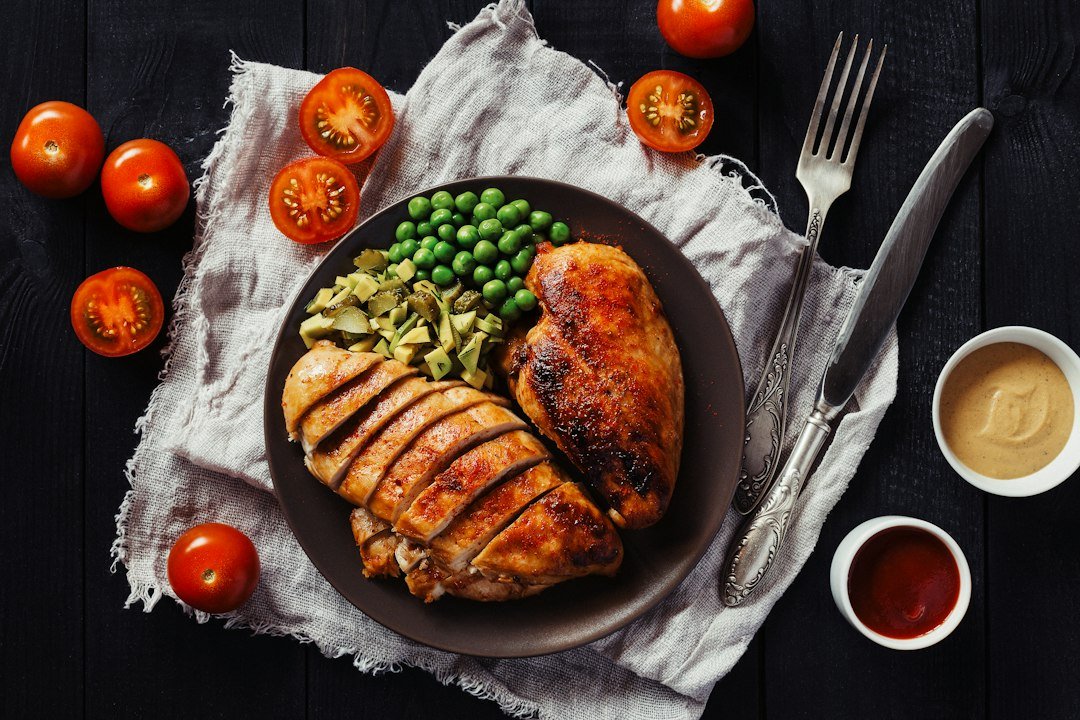
Write a short description of the meal as it will be served. Include the sauce or gravy, the strongest seasoning, any noticeably sweet glaze, the sides and whether guests have asked for a particular wine style or no alcohol. “Roast chicken” alone leaves most of that information out.
For example, chicken with a light herb dressing and chicken served in a creamy sauce share a protein but present different choices at the table. A sharply dressed salad or sweet side can also change the overall impression. You do not need a technical tasting vocabulary: “herby,” “creamy,” “sweet sauce” and “no strong sauce” are useful descriptions to take to a shop.
Our sauce-first pairing guide explains the broader method. This page applies that method to a roast-chicken dinner, rather than creating another general chart of every meat and wine.
Choose a starting lane, not a winning bottle
Wine Folly's chicken and poultry guide suggests Chardonnay, rosé and light reds among its roast-poultry options. It also discusses oaked Chardonnay with creamy dishes and Sauvignon Blanc with green herbs. The table below adapts that guidance into a small planning shortlist; it is not a tasting performed by Marlargo or a promise about every bottle carrying that grape name.
| What leads the plate | A style to ask about | What to confirm before choosing |
|---|---|---|
| A straightforward roast without a dominant sauce | Chardonnay, dry rosé or a lighter Pinot Noir | Which style the people drinking it actually prefer |
| A creamy sauce | A fuller Chardonnay; ask about oak character | Whether you want the wine to echo that richness |
| Green herbs as the main seasoning | Sauvignon Blanc as a starting option | Whether the actual bottle and full dish suit the group |
| A sweet or very spicy glaze | Ask for advice using the exact sauce | Do not apply the plain-roast shortlist automatically |
Grape names do not give every detail of a bottle's taste. If you dislike an oaky style, say so rather than buying it because a chart mentioned Chardonnay. If the group prefers a lighter red, that preference is relevant to the decision. A technically elaborate recommendation that nobody wants to drink has not solved your dinner problem.
Make one clear request at the wine shop
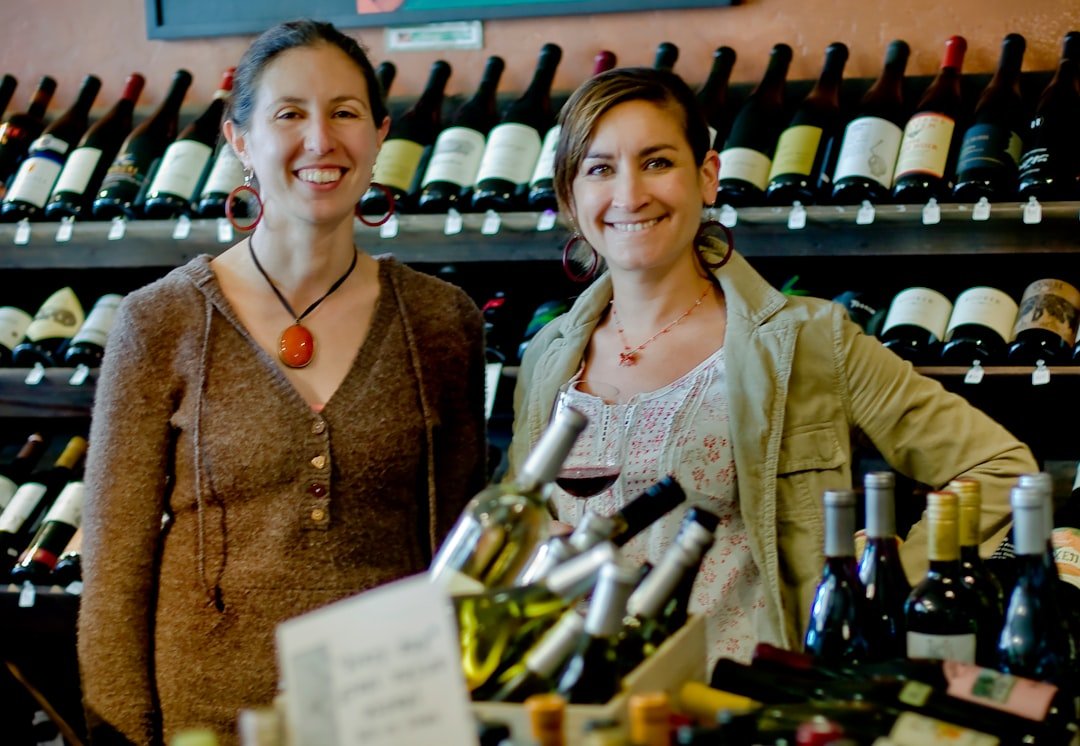
Give the retailer the meal description, a firm bottle budget and the preferred broad style. Ask for one suitable option available within that budget. A simple request might be: “This is roast chicken with a creamy sauce. We prefer white wine without much obvious oak. What would you suggest within our budget?” This is an original example, not a recorded customer consultation.
Ask what about the suggested bottle makes it a fit for your description and whether there is a simpler alternative already in the style you know. You do not need to buy the more expensive option to complete the pairing. Avoid treating a score, luxury label or unfamiliar region as a substitute for the actual meal and preferences.
The meal-and-budget shop guide covers that conversation in more detail. Any price, stock or bottle-specific claim still needs to be checked with the seller; this article supplies no live recommendations or current offers.
Include an alcohol-free choice from the start
Water, sparkling water or another clearly labelled drink can belong at the same table without being presented as a lesser option. Ask people what they would like without requiring a personal explanation. Check ingredients and labels for the particular drink rather than assuming a wine alternative suits every dietary or alcohol-avoidance need.
For example, you could set out chilled sparkling water alongside still water and let guests choose. That is a serving option, not a claim that it reproduces wine's flavour or gives a proven ideal pairing. If someone needs to avoid alcohol completely, do not infer suitability from a product name alone.
Use our wine and alcohol-free table guide to plan the two routes together. This page does not recommend drinking amounts, override medical advice or supply cooking and food-storage instructions.
Keep a small record for the next dinner
Download the original roast-chicken pairing note. Record the meal, bottle identity or alcohol-free drink, budget, source of the suggestion and what you actually noticed after trying it. Leave the observation blank until you have an experience to record; the worksheet does not create a tasting result.
If the combination did not suit you, change one thing next time: a different wine style, a different sauce or the alcohol-free option you preferred. Do not conclude that all wines from a region fail with chicken from one dinner. A useful note keeps the conditions attached to the opinion.
Sources checked 15 October 2026. Marlargo has not tasted or purchased the pairings in this guide. The shortlist is a starting point for personal preference and a specific meal, with no guaranteed result, health claim or requirement to buy another bottle.